
Infertility
- Home
- Gynecological Disorders
- Infertility
Services
Get in Touch
Connect with Swathi Women’s Clinic for expert women’s care. We’re here to help.

Infertility can be an emotionally challenging journey for couples aspiring to start a family. At Dr. Swathi Women’s Clinic, we are committed to offering comprehensive and compassionate care for individuals and couples facing fertility issues. With advanced treatment options and personalized approaches, we aim to support every step of your journey. This educational content provides clear insights into infertility and highlights the common treatments available at our clinic for various gynecological conditions.
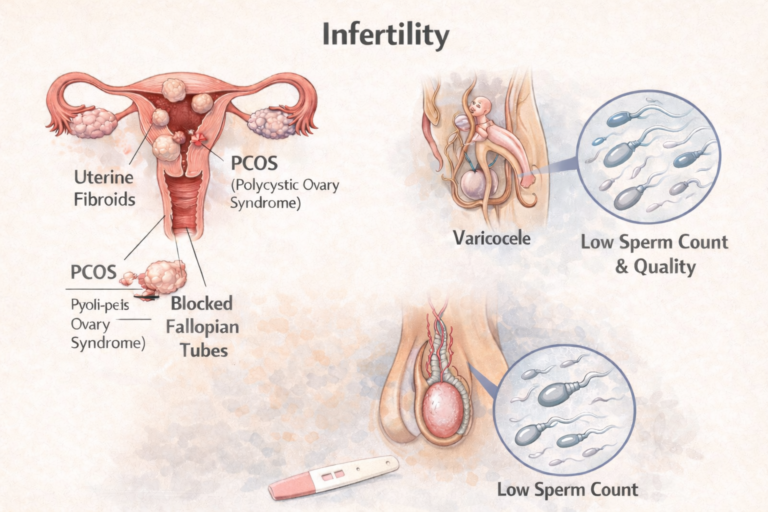
Understanding Infertility:
Infertility is defined as the inability to conceive after one year of regular, unprotected intercourse. It can affect both men and women and may arise from a variety of factors, including hormonal imbalances, structural abnormalities, or underlying reproductive health conditions. Today, infertility is a common concern, impacting millions of couples across the globe.
Common Causes of Infertility:
Ovulatory Disorders: Irregular or absent ovulation can reduce a woman’s chances of conceiving.
Male Factor Infertility: Problems such as low sperm count, poor motility, or abnormal sperm shape can affect fertility.
Structural Abnormalities: Issues involving the uterus, fallopian tubes, or cervix may interfere with successful conception.
Age-Related Infertility: Fertility naturally declines with age, especially in women over 35, due to reduced egg quality and quantity.
Hormonal Imbalances: Fluctuations in hormone levels can disrupt the menstrual cycle and ovulation process
Preventing Complications
Timely intervention and a well-rounded approach to fertility care play a crucial role in enhancing the chances of successful conception. Regular consultations, clear communication with healthcare professionals, and following the prescribed treatment plan can significantly improve outcomes.
Frequently Asked Questions
Infertility is when a couple is unable to conceive after 12 months or more of regular, unprotected intercourse.
Common causes include hormonal imbalance, PCOS, blocked fallopian tubes, uterine problems, thyroid disorders, or age-related factors.
In men, infertility can be due to low sperm count, poor sperm motility, hormonal issues, infections, or lifestyle factors like smoking and stress.
Yes, many infertility cases can be treated with medications, lifestyle changes, hormonal therapy, or assisted reproductive techniques like IUI and IVF.
It is diagnosed through blood tests, ultrasound scans, semen analysis, and other fertility evaluations for both partners.