
Gynecological Cancers in Women
Services
Get in Touch
Connect with Swathi Women’s Clinic for expert women’s care. We’re here to help.

Gynecological cancers refer to a group of malignancies that affect the female reproductive organs, including the cervix, ovaries, uterus, vagina, and vulva. At Dr. Swathi Women’s Clinic, we are committed to providing compassionate, comprehensive, and patient-centered care for women diagnosed with these conditions. This educational content offers clear insights into gynecological cancers, their risk factors, and the common treatment options available at our clinic for various gynecological disorders.
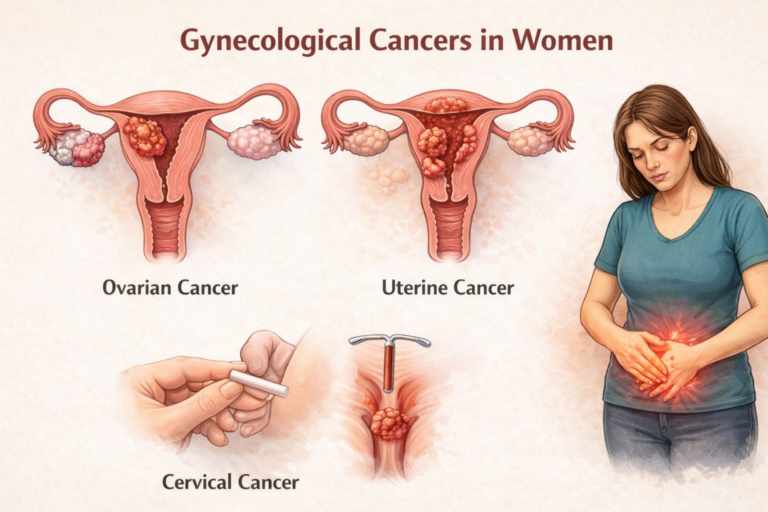
Understanding Gynecological Cancers:
Types of Gynecological Cancers:
Cervical Cancer:
Commonly associated with human papillomavirus (HPV) infection. Regular Pap smear screening and HPV vaccination play a vital role in early detection and prevention.
Ovarian Cancer:
Often detected at a later stage due to subtle or nonspecific symptoms. Key risk factors include genetic predisposition, family history, and increasing age.
Uterine (Endometrial) Cancer:
Develops in the lining of the uterus. Hormonal imbalances and obesity are among the major contributing risk factors.
Vaginal Cancer: A rare form of cancer, often linked to HPV infection and other underlying factors.
Vulvar Cancer: Affects the external female genital area. Risk factors include advancing age, HPV infection, and smoking
Preventing Complications
Regular screenings, including Pap smears and mammograms, play a vital role in early detection of gynecological cancers. HPV vaccination significantly reduces the risk of cervical cancer, while genetic counseling helps identify inherited risks, enabling timely and preventive care decisions.
Frequently Asked Questions
Gynecological cancers are cancers that begin in a woman’s reproductive organs such as the cervix, ovaries, uterus, vagina, and vulva.
The common types include cervical cancer, ovarian cancer, uterine (endometrial) cancer, vaginal cancer, and vulvar cancer.
Early signs may include abnormal vaginal bleeding, pelvic pain, unusual discharge, bloating, or frequent urination.
Visit Swathi Women’s Clinic if you experience irregular bleeding, pelvic pain, or any unusual symptoms for early diagnosis and care.
Regular check-ups, Pap smear tests, pelvic examinations, and ultrasound scans help in early detection.